Domain my-schedule.de kaufen?
Wir ziehen mit dem Projekt
my-schedule.de um.
Sind Sie am Kauf der Domain
my-schedule.de interessiert?
domain@kv-gmbh.de · 0541-91531010
Domain my-schedule.de kaufen?
Was bedeutet "my ride or die"?
"My ride or die" ist eine umgangssprachliche Redewendung, die eine Person beschreibt, auf die man sich in jeder Situation verlassen kann. Es bedeutet, dass diese Person immer an deiner Seite ist, egal was passiert, und dich unterstützt, egal wie schwierig die Umstände sind. Es drückt eine starke und bedingungslose Freundschaft oder Partnerschaft aus. **
Was bedeutet der Ausdruck "my ride or die"?
Der Ausdruck "my ride or die" stammt aus der Umgangssprache und bedeutet, dass jemand eine Person ist, auf die man sich in jeder Situation verlassen kann. Es handelt sich um eine enge Verbindung, bei der man bereit ist, alles füreinander zu tun und sich gegenseitig zu unterstützen, egal was passiert. **


Ähnliche Suchbegriffe für OR
Top-Angebote
Produkte zum Begriff OR:

-
Travelling or traveling?
Both "travelling" and "traveling" are correct spellings of the word, but they are used in different regions. "Travelling" is more commonly used in British English, while "traveling" is more commonly used in American English. **
-
Will or gonna?
"Will" and "gonna" are both used to express future actions, but there are slight differences in their usage. "Will" is more formal and is used in more formal situations, while "gonna" is a more informal and colloquial way of expressing future actions. **
-
Doesn't or don't?
The correct form to use depends on the subject of the sentence. "Doesn't" is used with singular subjects, while "don't" is used with plural subjects. For example, "He doesn't like coffee" (singular subject) and "They don't like coffee" (plural subject). **
-
Gucci or Prada?
That is a subjective question and it depends on personal preference. Both Gucci and Prada are luxury fashion brands known for their high-quality products and unique designs. It ultimately comes down to individual style and taste. **

Go or goes?
The correct form would depend on the subject of the sentence. "Go" is used with the pronouns "I," "you," "we," and "they," while "goes" is used with the pronouns "he," "she," and "it." For example, "I go to the store" and "She goes to the store." **
Cake or fake?
It depends on the context. If you are asking about a choice between eating cake or something that is not real, then cake would be the preferred option. However, if you are asking about the authenticity of something, then fake would imply that it is not genuine or real. **
Top-Angebote
Produkte zum Begriff OR:
-
Was bedeutet "my ride or die"?
"My ride or die" ist eine umgangssprachliche Redewendung, die eine Person beschreibt, auf die man sich in jeder Situation verlassen kann. Es bedeutet, dass diese Person immer an deiner Seite ist, egal was passiert, und dich unterstützt, egal wie schwierig die Umstände sind. Es drückt eine starke und bedingungslose Freundschaft oder Partnerschaft aus. **
-
Was bedeutet der Ausdruck "my ride or die"?
Der Ausdruck "my ride or die" stammt aus der Umgangssprache und bedeutet, dass jemand eine Person ist, auf die man sich in jeder Situation verlassen kann. Es handelt sich um eine enge Verbindung, bei der man bereit ist, alles füreinander zu tun und sich gegenseitig zu unterstützen, egal was passiert. **
-
Travelling or traveling?
Both "travelling" and "traveling" are correct spellings of the word, but they are used in different regions. "Travelling" is more commonly used in British English, while "traveling" is more commonly used in American English. **
-
Will or gonna?
"Will" and "gonna" are both used to express future actions, but there are slight differences in their usage. "Will" is more formal and is used in more formal situations, while "gonna" is a more informal and colloquial way of expressing future actions. **
Ähnliche Suchbegriffe für OR
-
OR OVARYOR OVARY ist ein Ergänzungsfuttermittel für Stuten, das entwickelt wurde, um ihr Wohlbefinden während der Brunst und in den verschiedenen Phasen des Zyklus zu fördern. Die Rezeptur enthält unter anderem Mönchspfeffer, Himbeere, Nachtkerze, Melisse, Kurkuma und Boswellia sowie Vitamine und Spurenelemente. OR OVARY unterstützt insbesondere Stuten, die empfindlich auf zyklusbedingte Schwankungen reagieren, und trägt dazu bei, ihr tägliches Wohlbefinden zu erhalten. Die Vorteile von OR OVARY: - Speziell für Stuten entwickeltes Ergänzungsfuttermittel - Fördert das Wohlbefinden während der Brunst - Rezeptur auf Basis von Pflanzenextrakten - Mönchspfeffer, Himbeere und Nachtkerze - Geeignet für Stuten, die empfindlich auf zyklusbedingte Schwankungen reagieren - Flüssige Form - Orale Verabreichung mit einer Spritze89,11 €*Versand: 3,99 €Sichere Weiterleitung zum Anbieter
-
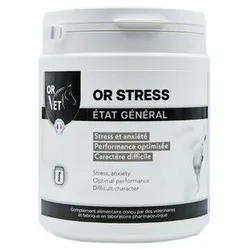
OR STRESSOR STRESS ist ein Ergänzungsfuttermittel für Pferde, das entwickelt wurde, um in Stresssituationen Ruhe, Gelassenheit und Wohlbefinden zu fördern. Die Rezeptur kombiniert Griffonia, Taurin, Tryptophan und Mineralstoffe, darunter Magnesium. OR STRESS unterstützt insbesondere empfindliche Pferde bei Transporten, Turnieren oder Umgebungswechseln. Die Vorteile von OR STRESS: - Ergänzungsfuttermittel für Pferde und Ponys - Fördert Ruhe und Gelassenheit - Geeignet für stressauslösende Situationen - Ideal bei Transporten und Turnieren - Griffonia, Taurin, Tryptophan und Magnesium - Für die punktuelle Anwendung geeignet - Pulverform, 300 g124,08 €*Versand: 3,99 €Sichere Weiterleitung zum Anbieter
-
Doesn't or don't?
The correct form to use depends on the subject of the sentence. "Doesn't" is used with singular subjects, while "don't" is used with plural subjects. For example, "He doesn't like coffee" (singular subject) and "They don't like coffee" (plural subject). **
-
Gucci or Prada?
That is a subjective question and it depends on personal preference. Both Gucci and Prada are luxury fashion brands known for their high-quality products and unique designs. It ultimately comes down to individual style and taste. **
-
Go or goes?
The correct form would depend on the subject of the sentence. "Go" is used with the pronouns "I," "you," "we," and "they," while "goes" is used with the pronouns "he," "she," and "it." For example, "I go to the store" and "She goes to the store." **
-
Cake or fake?
It depends on the context. If you are asking about a choice between eating cake or something that is not real, then cake would be the preferred option. However, if you are asking about the authenticity of something, then fake would imply that it is not genuine or real. **
* Alle Preise verstehen sich inklusive der gesetzlichen Mehrwertsteuer und ggf. zuzüglich Versandkosten. Die Angebotsinformationen basieren auf den Angaben des jeweiligen Shops und werden über automatisierte Prozesse aktualisiert. Eine Aktualisierung in Echtzeit findet nicht statt, so dass es im Einzelfall zu Abweichungen kommen kann. ** Hinweis: Teile dieses Inhalts wurden von KI erstellt.